
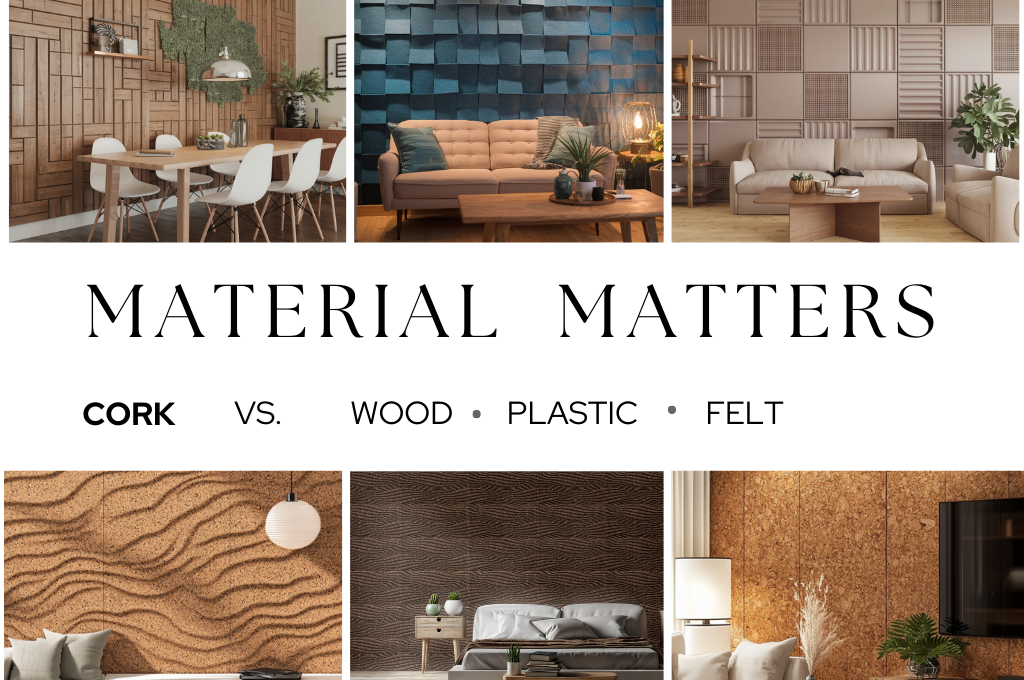
Are you looking to update your interior? Wall panels can change the feel of a room, bringing in natural texture, a softer finish, or a strong architectural pattern. Cork, felt, plastic, and wood each offer a different balance of appearance, care, cost, and performance.
Cork brings warmth and natural variation; felt offers a soft surface and a wide choice of colors; plastic provides versatile decorative finishes; and wood adds grain and architectural detail. The best choice depends on the room and the exact product you select. Here are the main advantages and trade-offs to consider.
Cork
Cork wall panels suit interiors where texture and a connection to natural materials are part of the design. Flat tiles create a subtle backdrop, while sculptural 3D panels make the wall a feature.
Pros
- Natural aesthetic: Cork has a warm, tactile surface with variations that give each wall its own character. It works with both contemporary and traditional interiors.
- Acoustic comfort: Selected cork panels can absorb some reflected sound and may help reduce echo. The effect depends on the panel, thickness, installation, wall coverage, and room. Decorative panels alone do not soundproof a space.
- Renewable raw material: Cork is harvested from the bark of cork oak trees without cutting down the tree. For a project requiring certification, ask for documentation covering the specific product.
- Design flexibility: Choose a flat finish for subtle texture or a 3D profile for depth and shadow. Review a sample under the lighting you plan to use.

(Product in the photo: Grace 3D Natural Black Cork Wall Panels)
Cons
- Sunlight and color changes: Prolonged direct sunlight can change the appearance of cork or its finish. Consider the wall location and follow the product care guidance.
- Moisture limits: Use decorative cork panels in dry interiors unless the exact product is approved for a wetter application. Resolve dampness in the wall before installation.
- Budget and installation: Compare the total cost of panels, adhesive, wall preparation, labor, and spare material. Detailed profiles and careful alignment can add to the work.
Felt
Felt panels introduce a soft visual texture and can be arranged in simple grids, geometric patterns, or colorful compositions. Check what the felt is made from: wool, polyester, and blended products have different properties.
Pros
- Soft appearance: Felt can make a workspace, lounge, or reading area feel less visually hard. Its textile surface contrasts well with glass, metal, and smooth furniture.
- Acoustic options: Some felt panel systems are designed and tested for sound absorption. Compare the specific product data, including thickness, backing, and mounting conditions.
- Creative versatility: Colors, shapes, and panel layouts offer flexibility for feature walls, zoning, and brand-inspired interiors.

Cons
- Cleaning requirements: Textured surfaces can collect dust, lint, or pet hair. Check the recommended cleaning method and how stains should be treated.
- Wear and repair: Edges and surfaces may show wear depending on fiber type and location. Ask how individual panels can be replaced in busy spaces.
- Material and moisture differences: Some felt is made from polyester or recycled PET; other products contain wool or mixed fibers. Verify composition, recycled-content claims, and suitability for humid areas instead of assuming every felt panel is the same.
Plastic
Plastic and polymer wall panels cover a broad range of products, from smooth sheets to molded decorative tiles. Look beyond the pattern and check the material, finish, installation requirements, and intended use.
Pros
- Budget options: Plastic panels are available at a range of price points and can be worth considering when controlling the initial material cost is a priority.
- Cleaning convenience: Many smooth finishes can be wiped clean. Confirm which cleaners are suitable and whether the seams and mounting system can handle the intended conditions.
- Variety of finishes: Molded shapes, colors, and surface effects make it possible to create a distinctive feature wall with a consistent manufactured appearance.

Cons
- Environmental considerations: Check the polymer type, any verified recycled content, expected service life, and local recycling options. A general recyclability claim does not mean the panel will be accepted locally.
- Product documentation: Review indoor-emissions information and application limits for the exact panel and adhesive. These cannot be inferred from appearance alone.
- Durability and acoustics: Resistance to scratching, heat, and sunlight varies. A sculpted surface is not proof of sound absorption; ask for relevant acoustic data if this matters to the project.
Wood
Wood wall panels bring grain, warmth, and a familiar architectural finish. Solid boards, veneers, and slatted systems can look similar in a photograph while differing in construction and performance.
Pros
- Natural character: Wood grain and tone can complement many interior styles, from understated feature walls to detailed decorative patterns.
- Potential longevity: Well-specified wood panels can offer a long service life when the finish, installation, and indoor conditions suit the product.
- Choice of finishes: Species, stains, veneers, and profiles provide many ways to coordinate a wall with flooring, furniture, and joinery.
- Responsible sourcing options: If certified sourcing is a project requirement, verify that the certification applies to the exact product being purchased.

Cons
- Care varies by finish: Some finishes need more maintenance than others. Check cleaning, repair, and any refinishing requirements before specifying the panels.
- Moisture movement: Wood products can respond to changes in humidity. Follow requirements for acclimatization, indoor conditions, fixing, and expansion gaps.
- System cost: Include the backing, battens, trims, fixings, and labor when comparing prices. For acoustic slat panels, review the full tested assembly; decorative slats alone do not establish sound absorption.
Final thoughts and choosing the right material
The right wall panel should suit how the room looks, how it is used, and how much care you want to give it.
Before ordering, compare physical samples in your room. Look at color, texture, joints, and edge details, then confirm wall preparation, installation, box coverage, cleaning, and delivery timing. If a project needs measured acoustic performance or other technical documentation, check the selected product and assembly before committing.
Habitus – Layered Cork Wall Tiles offer another cork option to explore. View the product for current sizes, finishes, and availability.

Explore our cork wall panel collection and order samples to compare designs in your space. For an office, hotel, restaurant, or other commercial project, contact our Trade and Commercial team with your wall dimensions and project requirements.
- Choose cork: For natural texture, warmth, and the choice of Classic cork wall panels or 3D Cork wall panels. Check the exact panel and installation when acoustic comfort is part of the brief.
- Choose felt: For a soft textile finish, color flexibility, and access to products designed for sound absorption.
- Consider plastic: For decorative variety and finishes that may offer convenient cleaning. Compare the product specifications and long-term care requirements.
- Choose wood: For grain, architectural detail, and a broad choice of finishes. Consider the complete system and its maintenance needs.